
Solidarity and strength were on display at the UFCW Minority Coalition’s 28th Annual Educational Conference and Recognition Awards Ball, held late last week in Washington, D.C.
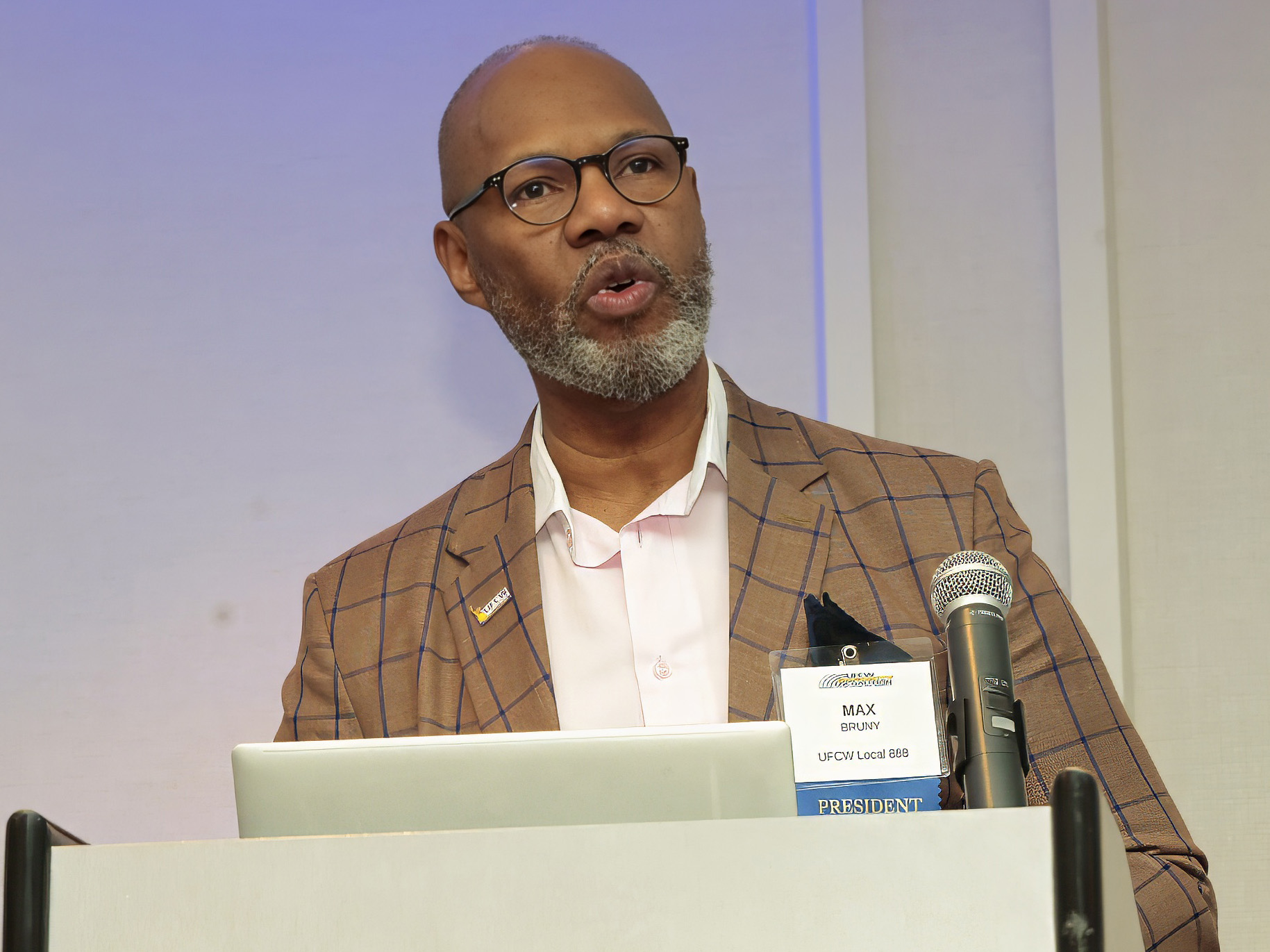
Organizers said this year’s theme, “Still Here. Still Fighting. Still Rising. Continuing the Fight, Redefining the Future,” is a declaration of resilience, purpose, and unwavering commitment to justice. Still riding the high of the midterm election results, attendees and speakers celebrated the outcome but did not shy away from the real challenges facing working people.
“Over the first two years of the [second] Trump administration, we have witnessed an unprecedented assault on many of the values and principles we hold dear,” said UFCW Minority Coalition President Max Bruny in his opening remarks.
“We have seen efforts to erase Black history, roll back civil rights protections, undermine voting rights through redistricting, and weaken the institutions that protect working families.
“We have witnessed an affordability crisis, reckless tariffs against our neighbors, mass deportations, and the elimination of hundreds of thousands of public-sector jobs. We have also witnessed widespread corruption and the growing influence of billionaires over public policy. But let me make one thing absolutely clear: we are still here! We are still fighting, and we are not going anywhere!”
In his welcome address, UFCW International Secretary-Treasurer Shawn Haggerty said the Minority Coalition’s ability to rally its members around key pro-worker issues is essential during this time of governmental transition.
“When we stand together as one union, one voice, and one movement, we can reclaim and protect power in the workplace,” he said. “Our union is stronger today because of your work. It’s more diverse, more united, and more determined than ever before to organize, mobilize, and make sure every worker has a seat at the table and a voice in their future. So let this conference be a reminder of our strength and a launching point for the work ahead.”
Speakers from UFCW locals and other affiliates led workshops, question-and-answer sessions, and panel discussions during the Educational Conference portion of the event. Topics included the politics, barriers, and initiatives facing the labor movement, as well as the current and future state of cannabis policies and regulations in the U.S. and Canada.
Addressing what’s ahead following the midterms, UFCW political coordinators from Georgia, Michigan, Mississippi, Ohio, and Texas joined a panel to discuss what labor’s on-the-ground coordination meant for the election results, why the wins are just the first step in longer-term planning and engagement, and what they are looking forward to in their respective states.
The Recognition Awards Ceremony and Ball, held after the conference, honored outstanding individuals and UFCW local representatives for their service to members, including advocates for children, the leaders who guide the union’s local affiliates, and scholarship recipients.
The UFCW International presented a special donation to Howard University’s Sickle Cell Disease Center to support its work providing comprehensive care, research, and education for people affected by the disease, which disproportionately affects people of African ancestry.
The center’s director, Dr. James Taylor, who attended the event, told organizers that previous contributions that came in from across UFCW have helped increase his team’s ability to screen people for sickle cell disease.
“We just had a certification and credentialing visit from the Centers for Medicare and Medicaid Services for our diagnostic lab’s Clinical Laboratory Improvement Amendments certification. We passed with the best review of the last 10 years,” he said. “We used the large gift from UFCW a couple of years ago to refresh the lab and to further support our free screening program.
“This year, we have screened more than 700 individuals at community outreach events. And we are having people reach out to us from other states to attend screening events, including a number of HBCUs. The beauty of our screening program is that we will catch not only sickle cell trait, but all of the other traits that are less common but also have the potential for combining with sickle hemoglobin and creating a slightly different form of sickle cell disease. Nothing would make me happier than to potentially screen every HBCU student who would like to have this information.”
Learn more about the UFCW Minority Coalition’s work and upcoming events.