
Bargaining representatives from 13 locals throughout the Northeast spent two days at UFCW Local 371’s office in Westport, Conn., learning how to build a winning contract, from the first planning session through negotiations to the final ratification vote.
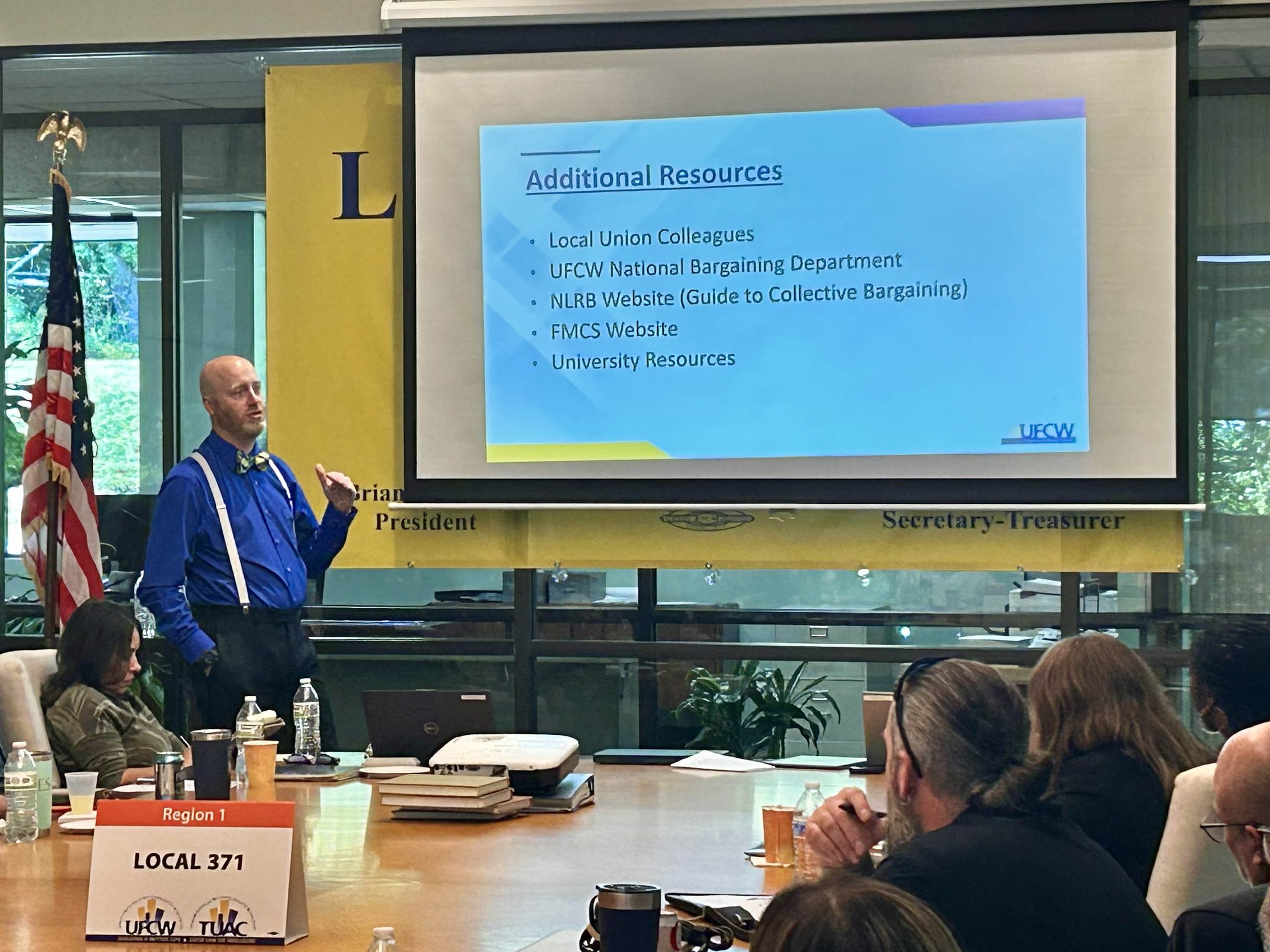
Ralph Porras and Adam Blunt of the UFCW National Bargaining Department led the training, which covered the lifecycle of a contract, strategies and critical-thinking techniques for recognizing and countering an employer’s stalling tactics, using emotional intelligence as a bargaining tool, developing communication strategies, and more.
UFCW Region 1 International Vice President and Director Fallon Ager-Norman said the strong turnout reflects the region’s commitment to winning good contracts.
“Ratifying strong contracts is one of the most important things we can do for our members,” she said. “This training gives our Region 1 negotiators the tools they need to get the best possible outcomes, and I look forward to seeing the results!”
To start, the trainers outlined the five stages most negotiations go through on the way to an agreement: preparation and planning, opening sessions, proposal exchanges, escalation, and closure and ratification.
For each stage, the trainers took a deep dive into the opportunities and challenges negotiators face, including how to strategically deploy requests for information (RFIs) and how to recognize different personality traits and their impact on deliberations.
They cautioned against anchoring bias: fixating on the first piece of information or position received or created, then making later adjustments from that anchor rather than basing decisions objectively on new or relevant data.
They also urged participants to develop strategic campaign calendars and targeted communication schedules before bargaining begins, so negotiators can anticipate challenges rather than just respond to them afterward. Being proactive shifts negotiators from reacting to leading. Maintaining a steady, consistent flow of information also ensures that members, customers, communities and allies are engaged during the entire bargaining cycle.
The group also learned several nonnegotiable traits that every lead negotiator should possess and aim to exercise during all bargaining sessions: concise verbal communication, honesty, conflict resolution skills and, most important, integrity at the table to continue upholding the UFCW’s high standards when bargaining contracts that cover the livelihoods of the union’s members.
Crystal Bouchie of UFCW Local 1459 was among the approximately 50 local staffers who benefited from the training.
“I really enjoyed that the trainers took our feedback and tailored the program to what we were asking for,” she said. “I learned so much and I’m grateful that I got genuinely helpful feedback on how to improve my bargaining skills to be able to do better for our members.”
Putting what he learned to the test during the role-playing exercise brought the pieces together for Local 1102 RWDSU/UFCW’s Jorge Gomez.
“During the mock bargaining session, I found myself quickly applying the concepts from the seminar. My biggest takeaway was that information is always being given during bargaining, even when it isn’t said out loud,” he said. “We learned about nonverbal cues and how to read the reactions of the people across the table to get the most information possible.
“This training made me aware of where I can improve as a negotiator. Knowing my weaknesses and how to address them will help me in future bargaining.”
The hands-on activity was a highlight for presenter Adam Blunt as well.
“It was inspiring to see local staff engage with each other throughout the training and participate collectively in the simulated bargaining sessions,” he said.
“This training builds member power and is essential for all union staff because there is so much bargaining experience throughout the UFCW, and this training is an opportunity to share that experience while also building our next generation of bargainers.”
If your local would like to host a bargaining training, reach out to your Region Director for more information.